My Creative Self has ADD

writing, blogs, authors, creating,writersHere I sit, once again, in my night T-shirt……….. and it’s 2 o’clock in the afternoon. 

It was just fifteen minutes ago (six hours ago) that I sat down to read and respond to email while my morning tea brewed.

As I was replying to my mail, a new author interview response came in and I couldn’t wait to read it and prepare it for my blog calendar .  

I just finished (and published) a new short play, Date Night.  As I mentioned before I write things in my head for several days, then slam it down on paper, (in my case, computer screen), and then I begin editing.  It was a tough one (of the 40+ plays I’ve published) to write because I had never purposefully written a satire before now. 

An idea for another true crime mystery (in the series) had bubbled up several months ago and I pushed it away…..’Go away, wait a bit, I’ve got enough to do….’  but it is insistent!  I’m playing with that too. 

And then I began to write this posting in my head …….and then thought of a few more authors I want to contact to ask them for an interview….see? bona fide ADD.

Is this cerebral chaos  a bad thing?…I don’t think so…it seems to work for me.   I wanted to tell you just how crazed my writing life can be so that any pressure you might be feeling will ease.  There is no right or wrong way to how we work when we are writing.  The most important thing is to keep writing, every day if you can, even if you think what you are writing is not important; it just might  be someday.   I think , after twelve years of  interviewing  other authors, that fact is shining through.

…….so guess I’d better go shower, eat something, play with the dogs, (a tennis ball is calling) and turn off my brain for awhile.  HA!  Fat chance of that!!   P.S. My tea is cold.
~~~~~~~~~~~~~~~~

📬 Want more reviews, author interviews, and behind-the-scenes glimpses into the writing life? Sign up on the — just enter your email address and never miss a post.

 BOOKS BY TRISHA SUGAREK

If you enjoyed this review, you might love my own stories — full of heart, grit, and unforgettable characters.

The Deep South Trilogy

  • Ain’t Nuthin’ Gonna Separate Us 
  • Mother Mac’s Boarding House
  • Coming Soon: Book Three: Living at Mother Mac’s


Tips for Creative Writing * Fiction

Recently, the Professor leading the creative writing department at Pace University wrote to say that she was using one of my true crime stories (Act of Murder) as the sample text in the offered course, “How To Write Mysteries and True Crime”.  Such an honor!

I fired off enough copies to cover the students taking the class with these tips:

TIPS:

1. You can’t have too much dialogue
2. You CAN have too much descriptive
3. SHOW don’t TELL.  For example: Instead of writing:  (telling) Stella walked across the busy street, dodging cars.   (SHOWING) Holding up her hand, her badge tucked in her palm, Stella skipped to the other side, between the parked cars jammed to a standstill on the busy street . “Whad’ya waiting for, Jack?” She taunted her partner. 

4. Be certain your forensics are accurate.
 I once called an ME to ask how long traces of Vanilla Wafers and grape soda would remain in the stomach. (Angel of Murder) I didn’t trust what i found online. He was kind enough to take my call.

5. Your deceased victim is a character in your story. They should be as interesting as the other characters. At the least, they should have a life story.

~~~~~~~~~~~~~~~~~~~~~~

To receive my posts, sign up   On the home page. Enter your email address. Watch for more interviews with authors.  

A few BOOKS BY TRISHA SUGAREK


Conclusion ~ Interview with author, Christina Dudley

Q. Do you think we will see, in our lifetime, the total demise of paper
books?

CD. I doubt it. They’re expensive, but plenty of people love paper books. I do think traditional publishers might start to do smaller print runs for books that aren’t expected to be blockbusters. I myself don’t do print anymore unless I want to look at maps or find it at a used bookstore, because who has the space?

Q. What makes a writer great?

CD. No two readers will ever agree on this! When I put my own fiction-reader hat on, I’m looking for books with rounded characters and plausible situations, even if it’s set in a fantasy world. Bonus points if the story makes me laugh. Not too much navel-gazing, please, and a plot with a traditional conflict-rising action-climax-denouement. I must be too old to enjoy the stories where there’s no real conflict, or where it’s resolved with 25% left to go, and then it’s just 25% of people riding off into the sunset. Yawn.
When it comes to nonfiction, which I also love, I want to learn something and have it told to me like a story. Books like The Boys in the Boat and Into Thin Air delight me.  

Q. How have your life experiences influenced your writing?

CD. With Pride and Preston Lin, I threw in everything from my life, it felt like. I sent Lissie Cheng to my high school and had her live in my hometown. The family restaurant was one I ate at frequently throughout my life. My husband and I met in grad school at Stanford, so that played a prominent role. Heck, even my English country dance lessons and my time as a swim official for youth swimming made it in! And though the book takes place mostly in the San Francisco Bay Area, I placed a pivotal scene at the King County Aquatic Center up in my neck of the woods, as a nod to all the hours and hours I spent there when my kids were swimming.
But even my Regencies reflect my life: my love for Austen and Regency romances; how I almost studied 18th century literature in grad school because I had a fabulous professor for an Austen seminar; how my favorite stories involve lovable families (think Laura Ingalls Wilder and Betsy-Tacy and All-of-a-Kind Family); how I love English literature in general, from Renaissance poetry to the end of the 19th century, etc.

Q. What’s your downtime look like?

CD:  I walk daily, am involved at my church, belong to the same book club I’ve been in for decades, and otherwise love all things sedentary, including reading, eating, and watching baseball.

Q. Have you or do you want to write in another genre?

CD. Yes! I’d love to do more contemporary romance and am excited to do another. But I’ll always love Regency.

Q. Note to Self: (a life lesson you’ve learned.)

CD. Trying to make a living wage writing is like trying to be struck by lightning. You can’t make it happen, but you can put yourself in the best places where lightning strikes.

Did you miss  the beginning of my  Interview with the talented, Christina Dudley?
~~~~~~~~~~~~~~~~~~~~~~~~~~~

To receive my posts, sign up   On the home page. Enter your email address. Watch for more interviews with authors.  

A few BOOKS BY TRISHA SUGAREK


A Good Writer is a Good Observer

A good writer is always observing and watching other people and their interpersonal relationships with others. Relationships are complex and rarely resemble yours. And of course…listening.  Everyone speaks differently, with a different word choice and a varied cadence to their speech.  This can translate to your writing and add another layer of ‘flavor’ to your dialogue.  

I also recommend watching movies or series to learn dialogue writing.  But, not just the ‘bad’ movies, poorly written, poorly directed, and poorly acted.  Watch the good ones too…ones you liked. 

I recently was binge-watching an older series, “Six Feet Under“.  One which I had loved when it was new and couldn’t wait for each episode to air.  I began watching for the simple pleasure of re-watching it.  But three or four episodes in, I began to critique it.  Especially the character of Ruth; the mother of the Fisher family.  She had a hot temper and I am certain that was ‘written’ in for the character.  However, the actor, (Frances Conroy) went from 0 to 10 when the script called for  temper.  There was no layering.  At first I blamed the writing…then the director.  My final analysis was that the

 writing (without seeing the script) was hardly at fault. Or maybe a little bit not having enough blocking written in. Don’t forget, emotion can be written as part of the blocking. 

Then I laid some blame at the director’s feet for not noticing that his actor had only two levels; calm and yelling. And the yelling came out of the blue and was all the same.  Why didn’t the director catch this?  Well, he did have a huge cast to direct and watch over. So mostly the responsibility lay with the lazy actor. An actor who wants to get as much as possible out of a part would look for those layers, subtle though they may be. Ed O’Ross (Nikolai, the fiery Russian florist) was excellent at layering his character’s emotions.  

No script or production is perfect. You can watch ANYTHING and learn from it.  Same with reading. I’ll give you an example; when I noticed a couple of authors using the same word or phase over and over in their work of fiction, I realized I might suffer from the same curse. My nemeses is the word ‘just‘.  My guard dog is the feature (in any word processing platform) ‘find’ or ‘replace’ and I use it to root out the 300 times I used ‘just’. (hahaha)

If you’re a screen writer, visuals are more important than diaglogue.  Your blocking can include the silent dialogue. Write in the non-verbal speech of an actor.  In ‘Six Feet Under‘, actor, Lauren Ambrose (Claire) and Jeremy Sisto (Billy) were superb with their non-verbal dialogue, using facial and eye expressions and body language. This credit I give to the director and the excellent actors.  

When writing stage plays the playwright should keep ‘action’ simple. Write some emotional blocking in but always remember the director is going to have their own thoughts about how the scene should go.  Be careful not to do the director’s job for them.  It won’t be appreciated.  

If you are a screenwriter or writing fiction you probably think you have no interest in theatre.  One of your best sourses to learn about writing dialogue is the theatre.  Live stage plays are the Mecca of good or bad dialogue.  Go there, observe and learn! 

Another link on the subject of over-usage of words.
~~~~~~~~~~~~~~~~~~~~~~~~~~~~~~~~~~~~~~~~~~~~~~~~~~~~~~~~~~~~~~~~~~~~~~~~~~~~~~~~~~

To receive my weekly posts, sign up   On the home page. Enter your email address. Watch for more interviews with authors.  

A few BOOKS BY TRISHA SUGAREK


A Word to Newbie Writers

authors, writers, reviews, famous authors
Charles Bukowski

He was, in my opinion, the greatest American fiction writer of the last half of the 20th century.   Fortunately for his book sales, most think of him as the archetypal drunk, misanthropic male pig. Whatever else he was, he was also the archetypal writer, a force of nature who knew exactly what to do to a blank page. 

Bukowski attributed so much weight to the single line that it eclipsed the writing philosophy of writing. If the single line was magnificent, the rest would take care of itself.  In a 60,000 word novel, the working focus was on the single line. In the sex stories he wrote and sold to skin mags for money, the working focus was on the single line. In a small, immortal poem that 50 people might read, his working focus was on the single line.

Do you possess this kind of love for your words? Well?  Do you?  Possess this kind of love and respect for your work? Do you respect your craft enough to narrow your focus to the attention of a single line? It’s not easy. It’s not fast. “But this must certainly be a path to immortal (and powerfully influential) writing.  If you can stomach it.”   Robert Bruce when writing about Henry Charles Bukowski, Jr.
****************************************************************************************************

I’ve encouraged to re-write and delete and edit so much in my blogging you probably want to take a
‘delete’ key to me!  BUT!  It’s what makes a so-so writer into a good or great one.

Experienced writers know this and value the rewrite more than anything.  That’s really when the magic happens.
In a recent interview here with Jo-Ann Mapson, she said, “I love rewriting. Just thank God for it every single day, because that is where good writing pokes its head up.”

A word to you aspiring writers:  I’ve been there, believe me, when I was terrified to delete a single word.
Not that I was certain that everything I uttered was ‘gold’…..far from it….no, terrified that I had nothing better to replace it with. Now that I have found my ‘process’ I understand how I work.  I write it in my head for days, then, when the moment comes I type (thank God for my Admin skills of 75 wpm in a previous life).  Once the story is laid down, I begin the re-writing, editing, adding, deleting.

Re-writing and deleting:  some of my best work has been born in the re-write.  Some of my worst work has been write, create, writing, authors, blogdeleted.  Get it?

The Delete key:  I know, I know, I’m a tired old record.  But it can’t be said enough.  Get to know and love your delete key.  Every word you write isn’t going to be ‘golden’.  Before you push your child (story) out into traffic (the world) you are the only critic and editor in the room.  Be certain that you critique yourself; keep polishing, keep editing.

I’m of the school of writers that believes my work is never finished;  I could and have found something to re-write in everything I have published.  It’s a demon I have to live with.

The Mocking Bird by Charles Bukowski ©

The mocking bird had been following the cat
all summer
mocking, mocking, mocking

Teasing and cocksure;
the cat crawled under rockers on porches
tail flashing
and said something angry to the mocking bird
which I didn’t understand

Yesterday the cat walked calmly up the driveway
with the mocking bird alive in its mouth
wings fanned, wings fanned and flopping
feathers parted like a woman’s legs
and the bird was no longer mocking…   (from his book of poetry:  The Pleasures of the Damned)

Reprised from post 3/2013 writeratplay.com
~~~~~~~~~~~~~~~~~~~~~~~~~~~~~~~~~~~~~~~~~~~~~~~~~~~~~~~~~~~~~~~~~~~~~

To receive my weekly posts, sign up for my  On the home page, enter your email address. 

Watch for more interviews with authors.  October: Simon Gervais for ROBERT LUDLUM, November:  Horror writer, Kevin J. Kennedy, December: Marc Cameron, writing for TOM CLANCY


A few BOOKS BY TRISHA SUGAREK


Strong Writing vs Sloppy, Weak Writing

Dear fellow writers,

The one thing that gives me hives faster than nettles, hives, or food allergies is SLOPPY TENSE by a writer!

I am currently reading a book (Spinning Jenny) that could have been an excellent story, could have been pretty good writing for a debut book, and could have some well-thought-out and developed characters except for the writer (Sylvia Ann McLain)  who wrote the entire thing using the present tense. Then slipping into past tense and frequently mixing the two.  (Grrrrr….teeth gnashing.)

Here’s a sample, quoting from the book:  “Children race about, babies are wailing, and clusters of women talk among themselves. Some sit by themselves with Bibles in their laps.  Farther off in the woods, blacks (did they use this term in 1833?)  have set up their own camps; their tents are made of quilts thrown over ropes between the trees.”

Edited:  Children raced around, babies wailed, and clusters of women gathered to talk amongst themselves. A few sat by themselves with their Bibles in their laps.  Further off into the woods Negroes set up their camps.  Their tents were made by throwing quilts over ropes tied between the tree trunks.

and:  “But back at Carefree, there’s a body waiting for her to view it. She dreads it as she drives up the hill to her home.  A body! Has she ever seen a dead person before? Not that she remembers. Why can’t Sophronia get up out of her bed and do something for once? But it’s getting on to twelve o’clock. She has to hurry.” 

Edited:  A body waited for her to view back at Carefree. Stephanie dreaded it as she drove up the hill to her home. A body! Has she ever seen a dead person before? Not that she remembered. Why couldn’t Sophronia get up out of her bed and do something for once? But it was close to noon. She had to hurry.

I like to use italics for internal dialogue but it’s not a rule.   What is a grammatical rule is “i.n.g.’ ing” every other word is poor writing no matter how you look at it.  

There is no rule set in stone somewhere that fiction must be written in the past tense. But it is the accepted and expected tense that 98% of writers use.  More importantly, readers expect it even if they are unaware. 
99% of the time, if a book is written in anything other than past tense, it has not been written that way on purpose; the writer is new, and the book is their first one, and they are ignorant of what is expected and what the industry standard is.  It makes them look like the amateur that they are. 

PS. Finally. Finished it. This book was a real slog. And then to find out the ending was a setup for a sequel. The storyline didn’t support that. Ugh!!!!!!

~~~~~~~~~~~~~~~~~~~~~~~~~~~~~~~~~~~~~~~~~~~~~~~~~~~~~~~~~~~~~~~~~~~

To receive my weekly posts, sign up for my  On the home page, enter your email address. 

Watch for more interviews with authors.  September: Culley Holderfield. October: Simon Gervais for ROBERT LUDLUM, November: Kevin J. Kennedy, December: Marc Cameron, writing for TOM CLANCY


A few BOOKS BY TRISHA SUGAREK

Interview with Historical Romance Author, Mimi Matthews

Bestselling author Mimi Matthews writes both historical nonfiction and award-winning proper Victorian romances. Her novels have received starred reviews in Publishers Weekly, Library Journal, & Booklist, and her articles have been featured on the Victorian Web, the Journal of Victorian Culture, and in syndication at BUST Magazine. In her other life, Mimi is an attorney. She resides in California with her family, which includes a retired Andalusian dressage horse, a Sheltie, and two Siamese cats.

Q. Where do you write? Do you have a special room, shed, barn, special space for your writing? (please provide a photo of you at work in your shed, room, closet, barn, houseboat….) Or tell us about your ‘dream’ work space.

Jet and Stella

MM. I mostly write in bed. This is owing less to laziness than to a cervical spine injury I suffered several years ago. My neck requires lots of propping and support to keep it from flaring up. My room is wonderfully bright and spacious, though, with high ceilings and lots of big windows. I have built-in bookcases filled with history books, law books, and all my favorite novels. I also have a capacious secretary desk, which I don’t use as much as I should. One perk of writing in bed is that my cats and dogs all pile in with me. They’re basically my co-writers.

Q. Do you have any special rituals or quirks when you sit down to write? (a neat work space, sharpened #2 pencils, legal pad, cup of tea, glass of brandy, favorite pajamas, etc.)

MM. I have no quirks, rituals, or writerly affectations. My process consists of opening a word document on my laptop. Of course, peace and quiet helps tremendously. And diet Cherry Pepsi, too, if I can get it.

Q. Could you tell us something about yourself that we might not already know?

MM. I love to travel but hate to fly. In the past, I used to master by fear in order to go to the places I wanted to go. Now however, I’m not sure I’ll ever fly again. Even thinking about it makes me anxious. The last time I was on a plane it had to make an emergency landing. There were firetrucks waiting for us on the runway. That may have been it for me.

Coming! January, 2022

Q. What tools do you begin with? Legal pad, spiral notebook, pencils, fountain pen, or do you go right to your keyboard?

MM. I start with my laptop. That’s pretty much it.

Q. Do you have a set time each day (or night) to write?

MM. I like to start by 1pm. Ideally, I start earlier, but 1pm is my “do or die” marker.

One of this blogger’s favs….

Q. What’s your best advice to other writers for overcoming procrastination?

MM. For me, some days all it takes is opening a word document. Once I have the document in front of me, the words often come. If not, it helps to reread the last scene I wrote. Writing sprints can also help if I’m really feeling reluctant.

Q. Where/when do you first discover your characters?

MM. I always begin a story with an idea of them, even if it’s just a vague one. As I write and research, they become fully formed in my mind. I’m a pantser, not a plotter, so am accustomed to discovering things as I go.

Q. What first inspired you to write?

MM. When I was very small, I used to tell stories to my mom. She encouraged me to write them down. It was a personal exercise, done more for my own amusement than with any view to being a writer one day. I’m not sure I even understood what a novelist was.

Don’t miss the conclusion.
~~~~~~~~~~~~~~~~~~~~~~~~~~~~~~~~~~~~~~~~~~~~~~~~~~~~~~~~~~~~~~~~~~~~~~~~~~~~~~~~~~~~~~~~~

My weekly BLOG features INTERVIEWS with  best-selling AUTHORS!    August: Veronica Henry, October: Life Coach, shaman, author, Jennifer Monahan, November: Susanne O’Leary, December: Mimi Mathews
To receive my weekly posts sign up for my 

  On the home page, enter your email address.  Thanks!

BOOKS BY TRISHA SUGAREK


Funny Senior Moments

I have a few gripes as I grow older and thought I would probably have an audience that can IM'ingrelate!

1. Please!  No child-proof caps on my medicine bottles….these old hands cannot open them.

2. Whenever I say ‘thank you‘ to anyone under 50 the answer I get is ‘no problem‘.  What happened to ‘you’re welcome’?  ‘No problem’ implies that whatever they did for me to incite a ‘thank you’ might have been a problem for them.

3. Change in driving habits:  decades before we put a name to yelling, flipping someone off, etc., it wasn’t road rage….it was freedom of speech. In my twenties,  I went so far as to make a plaster mold of a hand flipping ‘the bird’ so I could wave it out my window!  Now?  I am a meek and courteous driver…you want to beat me to wherever you are going….be my guest!

4.  Even though the population is getting older and older we still don’t garner any respect from the younger generation.  Ageism is alive and well in this country.  Tip: From my stints in the hospital this year I learned something very important.  DO SOMETHING to make the staff at the hospital notice you (in a good way).  Show them that you are a human being worthy of their care.  My idea (and it worked!) was to take the day and night shifts copies of my books.  I instantly became a celebrity and I swear I received better care.

manwoman5. People who drive for miles with their directional signal on…..their music is so loud that they can’t hear the clicking the signal makes, or they are busy on their phones and they are oblivious to everything else.

6. People who talk too fast…..you know what I tell them?  “You’re talking faster than my ears can listen…would you repeat that last bit…and slower?” 

7.  Work ethic…….where the heck did it go?  These young people say they can’t find a job…….oh really?……….there’s lots of minimum wage jobs out there and that can lead to a ‘non-minimum’ paying job.  But what do I know?  One of my first jobs was waitressing in a cafe at $1.00 per hour.  Yep, after working 40 hours I came away with a paycheck of $40. less taxes and was GRATEFUL for the job.

8. Only one thing I like better than paper post-it-notes and that is the electronic ones.  At my age if it isn’t on a post-it, it doesn’t exist and therefore doesn’t get done!sen5

9. Drivers: So I’m driving on a four lane, city street, and up ahead someone is stopping to turn left….I have plenty of room to change lanes and use the outside lane to get by.  Wrong!!  The driver had stopped in his lane, and as I passed I see his right-turn signal on. He turns right across two lanes of traffic and into a driveway.  Warning: If you come to Savannah, beware of the drivers…….they are the worst I’ve ever seen.

10.  Tupperware!  After some 40 years the lid on one of my Tupperware bowl cracked.  (I wonder how healthy it was to keep using the plastic storage bowls that long.)  So my new bowls arrived …..yes the company is still producing Tupperware bowls.  The lids are different but the colors are so much more fun!

~~~~~~~~~~~~~~~~~~~~~~~~~~~~~~~~~~~~~~~~~~~~~~~~~~~~~~~~~~~~~~~~~~~~~~~~~~~~~~~~~~~~~~~~~~~~~~~~~~~~~~~~~~~~~~~~

My weekly BLOG features INTERVIEWS with  best-selling AUTHORS!    August: Veronica Henry, October: Life Coach, shaman, author, Jennifer Monahan, November: Susanne O’Leary, December: Mimi Mathews
To receive my weekly posts sign up for my 

  On the home page, enter your email address.  Thanks!

BOOKS BY TRISHA SUGAREK


Adapting your Stage Play into a Novella or Storybook

Many of my stage plays have ended up being the story outline (or more) in creating a children’s story book, or a short story, or a novella, or the bones of a novel.  I thought that I would share, with my readers and fellow playwrights my process in converting these plays/stories. 
The demand really began with my friends and fans insisting on more of the story they’d read or seen in a play. It wasn’t enough. Satisfyingly, they wanted to know what happened after the play ended, or they wanted to know how my characters got to where they were in the play’s timeframe. 
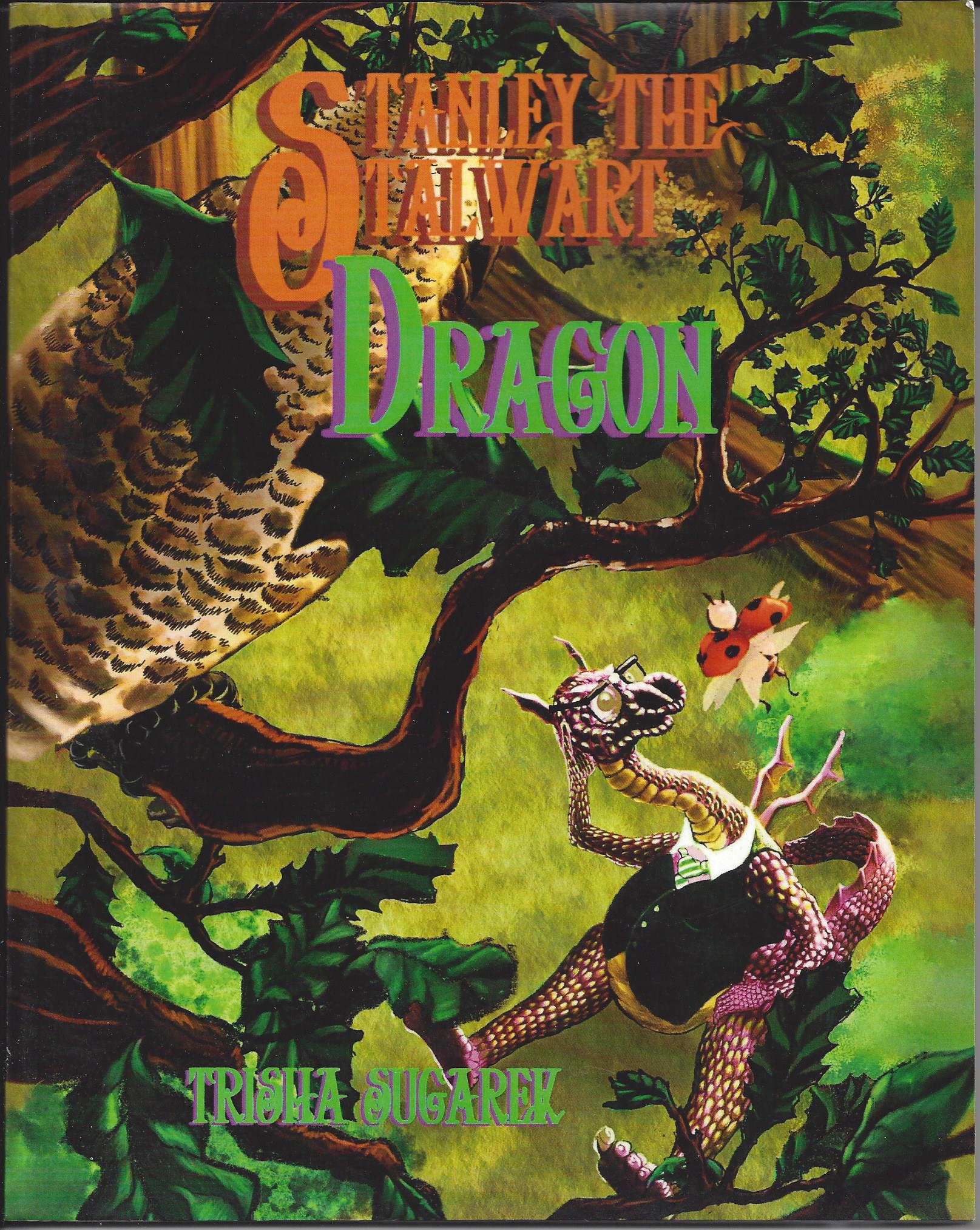
Currently I am adapting my latest children’s play in to a story book. A  chapter book with colored illustrations. 

First I pull up the full script. I re-read it in sections to get immerse, once more, in the story. The blocking will be my guide on describing the ‘action’. I will be certain to describe each character as they appear in the story. Something you can’t do writing a stage play. After I read this section of the play, I begin to describe the characters, the environment, the emotions within the scene. Remember, playwrights, you are now free to write as much description as you want. (But don’t be redundant or boring, please.)  I copy and paste the section of the play script into my new manuscript. Then I write above the scene in the play. I am able to use almost all of the dialogue that I have created in the play. After I have written the new work I delete the play script and go on to the next.  Here’s a sample:

Chapter 1 ©

Agnes and Annie, sister Aardvarks, stepped off the path into the forest clearing. Except for the occasional rustle in the underbrush and bird song it was a quiet, sun-filled idyllic setting. The smells of forest; tree sap, damp moss, rotting tree trunks, and hidden flowers filled their busy noses. It was worlds away from the dusty deserts in their homeland of Africa. They both looked around fearfully. The fanciful hats atop their heads bobbled in the breeze.
“I think we’re lost, dear sister.” Agnes moaned.
“This doesn’t look anything like the pictures of Australia in our book.”
“Oh, dear, I’m quite afraid,” Annie whispered.
“Whooo?” Something said from high atop a tree.
Annie rushed closer to her sister, “Ekk. What was that?”
Annie had always been the shy Aardvark. Her sister, Agnes had always been the bold one, leading the way and protecting her younger sister.
“Who?” Came the cry again.
“What?” Agnes demanded, looking up into the tree where she thought the sound was coming from. “There are so many trees, all mashed together, I can’t tell where the creature is, Annie.”
“Who?”
“That.” Annie cried.
“What?” Agnes demanded.
“I can’t see anything.” Annie said. “What do you suppose it is?”
“Not certain,” Agnes replied. “But keep a look out anyway.”
“I don’t like this place, Agnes.”

ACT I ©   (The section we are adapting.)
Scene 1

At Rise: Morning in the fabled forest. Pale sunlight filters through the trees.

(ANNIE and AGNES enter. THEY cross into a clearing, looking all around. THEY are wearing ridiculous hats and are carrying suitcases and a book entitled Australia. The WOODLAND CREATURES scatter into the underbrush.)

AGNES
(Gazing up into the trees, HER nose switching as fast as possible.)
I think we’re lost, dear sister. This doesn’t look anything like the pictures of Australia in our book.
ANNIE
(Frowning.)
Oh, dear, I’m quite afraid.

STARE

Whooo?
ANNIE
(ANNIE runs over to AGNES.)

Ekk. What was that?

STARE
Who?

AGNES
What?

STARE

Who?

ANNIE
That.

AGNES

Not certain. But keep a look out anyway.

ANNIE
I don’t like this place, Agnes.

AGNES

You’re such a scaredy-cat, Annie. It’s a simple forest, much like the jungles of home.

(DONALD, a fairie, enters whistling a merry tune. HE sees the Aardvarks. AGNES and ANNIE turn to run.)

DONALD

Don’t go. I mean you no harm.

STARE
Who? Who?

PATSY
(Knitting her web very fast.)

Eye–eee! Por favor, who are these ugly newcomers? Dios mío, ¿se comerán mis insectos? The bugs are for me and me alone!

You have your character list to refer to so you don’t forget or leave out a character from your play. In the story books, I always use an illustrator to bring the story alive with their wonderful color drawings based upon the scene I chosen.  I try, as much as possible, to give the artist full rein; hoping that they will be inspired by the writing. That approach has been very successful for me.  Here’s another sample of adapting a section of my play:


©   A couple of days had passed since Emma had visited the clearing in the forest. She and Donald had still not solved the problem of helping Annie and Agnes on their journey to Australia. There suddenly came some rustling of the undergrowth and Stare, the owl began to hoot.
“Who? Who? Who?”
“What’s wrong, Stare?” Emma peered up through the leaves and branches trying to see the owl.
“Whooo?”
From the path a man stumbled into the clearing. He wore work clothes, suspenders and a bow tie. A tool belt hung from his waist. He carried a large tool box. He walked to the middle of the clearing and made a courtly bow.
“Greetings from the Royal Court.”
“Oh my.” Emma murmured.
Donald stepped forward a couple of paces. “Greetings to you. Who are you, sir?”
“Who?” Asked Stare.
“Who might you be, young sir?”
“I’m Donald, a fairie of this realm.”
Taking his half-glasses off his nose he polished them with a clean, white handkerchief, “Blimey. Don’t think I’ve ever seen one before.”
“And you, sir?”
“Who?”
“Not now Stare.” Donald glanced up.
“Allow me to formally introduce myself. I’m Sir Fergus, the royal engineer. I’ve been sent here by the⸺”
Emma sighed, “The Queen.”
“Our Queen.”
“Who?” Stare asked.
“Who?” Annie asked.
“What’s a queen?” Agnes asked.
Cheets began running around the clearing, “The Queen! The Queen! The Queen Cometh!”
Sir Fergus looked around, “No. I don’t think so. It’s just me with my toolbox.”
“Why have you been sent to us, Mr. Fergus?”
“The name’s just Fergus, Miss. Or at court, Sir Fergus.”
“And you’re here because⸺?” Donald inquired.
“To repair your portal⸺time machine⸺of course. It is broken, isn’t it?”
“Our portal?”
“We have a portal? Cheets whispered in awe but having no idea what a portal was. “What is a portal, exactly?”
“And the Queen knew ours is broken?” Emma asked.
“Yes. Yes. Indubitably.” Fergus became impatient to see it, “If you’ll just show me the way, I’ll begin my work.”
“I’m afraid we have no idea where it might be in the forest.” Emma explained. “Until the sisters arrived we didn’t know anything about a portal. They arrived from Africa.”

ACT I ©
Scene 5

At Rise: The clearing in the forest.

(FERGUS, the royal engineer enters from the forest path. HE wears formal clothes but with a large bow-tie and a pocket protector in his shirt pocket. HE carries a large toolbox.)

FERGUS
(Sets down toolbox and bows.)
Greetings from the Royal Court.
EMMA
Oh my.
DONALD
Greetings to you. Who are you?
STARE
Who?
FERGUS
Who might you be?
STARE
Whooo?
DONALD
I’m Donald, a fairie of this realm.
FERGUS
(Takes his half-glasses off and polishes them.)
Blimey. Don’t think I’ve ever seen one before.
DONALD
And who are you, sir?
STARE
Who?
FERGUS
Allow me to formally introduce myself. I’m Fergus, the royal engineer. I’ve been sent here by the⸺
EMMA
(Sighing.)
The Queen.
DONALD
Our Queen.
STARE
Who?

AGNES
Who?
ANNIE
What’s a queen?
CHEETS
(Jumping up and down.)

The Queen! The Queen! The Queen Cometh!

FERGUS
(Looking around.)
No. I don’t think so. It’s just me and my toolbox.
EMMA
Why have you been sent to us, Mr. Fergus?
FERGUS
It’s just Fergus, Miss. Or in more formal settings, Sir Fergus.
DONALD
And you’re here because⸺?
FERGUS
To repair your portal⸺time machine⸺of course. It is broken, isn’t it?

Your play script can grow into something much more ambitious than a novella or children’s story. I have written three full length novels using my stage play as the story outline.
Please leave your comments if you found this informative and helpful. 
~~~~~~~~~~~~~~~~~~~~~~~~~~~~~~~~~~~~~~~~~~~~~~~~~~~~~~~~~~~~~~~~~~~~~~~~~~~~~~~~~~~~~~~~~~~~~~~~~~

My weekly BLOG features INTERVIEWS with  best-selling AUTHORS!    January: Madeline Hunter, February: Mike Lupica, March: Lee Matthew Goldberg, May: Jenny Colgan, June: Don Bentley writing for Tom Clancy.
To receive my weekly posts sign up for my 

  On the home page, enter your email address.  Thanks!

BOOKS BY TRISHA SUGAREK


Revise, Edit and Re-publish

My first novel was written in 2011. Being known as a playwright, I was urged by friends and fans to expound on the play by the same title. They were left unsatisfied by the play (even though it was a thumbnail of the story and quite successful on the stage.) They wanted more. What happened to the three women in the story? 

Writing a play is child’s play (pun intended) for someone like me. After all I’ve read thousands of play scripts and portrayed hundreds of characters from other plays, not my own.  One hundred pages is a walk in the park. But 300+ pages of a work of fiction. A Novel. I still remember the day I sat at my keyboard and faced the blank page 1. I was scared out of my mind.  Thank the stars I had a story plot and the stage play to refer to. 

Now, eight years later I brought it out and dusted it off. (Remember I’ve written about this before.) The first thing I do is check for my personal idiosyncrasies when writing: those words we all use too much. Mine are ‘just‘ and ‘that‘.  So I checked the first one. 264 ‘Justs‘ and I only needed about 28 of them. So I went through the manuscript and deleted a couple hundred. Ugh. 
Now, let’s see about the second word. ‘That’. 723. Oh dear!

Several years ago I was reading one of my favorite authors (when I’m not writing, I’m reading) and something was irritating me in the back of my consciousness, a little niggle. 

Then I realized the author repeatedly used the word ‘snickered’ or‘ snicker‘ when describing the tone of the dialogue. (Let the dialogue set the tone.) I doubt the author was even aware of it. ‘Snickered’ was exactly the same as my ‘that’. There’s a whole slew of synonyms for ‘snicker’ (she could have mixed it up) Scorned, scoffed, mocked, derided, sneered, snorted, etc. Once I discovered the culprit of my irritation, I couldn’t unsee the word and it spoiled the story for me. I put the book away, unread.

Technical Note: For those of you who don’t know how to find a word used to excess: Use the keys ‘Control F’; a box will open. type in the word that you might have used too much. It will tell you how many times it was used in the ms. And the word will be highlighted in yellow so you can easily edited them. 

So whenever you edit, clean up and revise an older work you will get a better story out it. You will achieve better writing. You may even find a new chapter or two.

“The difference between the almost right word and the right word is really a large matter. ’Tis the difference between the lightning bug and the lightning.” ― Mark Twain
~~~~~~~~~~~~~~~~~~~~~~~~~~~~~~~~~~~~~~~~~~~~~~~~~~~~~~~~~~~~~~~~~~~~~~~~~~~~~~~~~~~~~~~~~~~~~~~~~~~~~~~~

MY BLOG features INTERVIEWS with  best-selling AUTHORS!    July — Catherine Ryan Hyde.  August:  My interview with Susan Wiggs  September: Alan Foster (sci-fi) and October: Kristina McMorris
 
To receive my posts sign up for my 

  On the home page, enter your email address.  Thanks!